Description
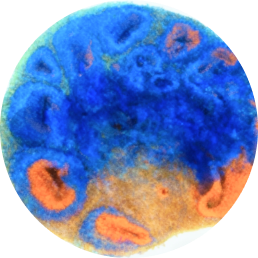
Ovine pancreas organoids are established from sheep pancreatic progenitor or ductal cells and can self-organize into 3D structures that reproduce key features of ruminant pancreatic tissue. They provide a physiologically relevant model for studying pancreatic development, endocrine and exocrine functions, metabolic disorders, and veterinary applications in ruminants, as well as host–pathogen interactions and drug testing.
Specifications & Applications
Growth Properties
Embedded 3D Culture
Quality Control
All test negative for mycoplasma, bacteria, yeast, and fungi.
Application
For research use only. Tissue-derived organoids are widely used in drug screening, disease modeling, mechanism research, personalized medicine, and regenerative medicine. By simulating authentic disease states, these organoids provide an ideal platform to assess patient responses to new drugs and assist in the design of personalized treatment plans.