What are Organoids?
A Guide to 3D Cell Culture Models in Biomedical Research
Introduction
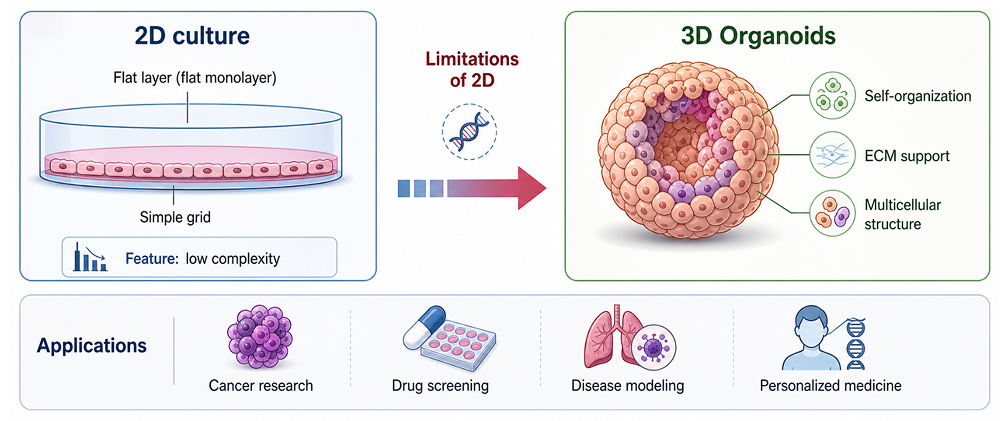
The development of 3D cell culture models has transformed biomedical research. Traditional two-dimensional (2D) culture systems have been widely used for decades, but they often fail to replicate the complexity and function of living tissues. This limitation has increased interest in organoid technology, as organoids can better reproduce the cellular heterogeneity, tissue architecture, and physiological microenvironment found in native organs. So, what are organoids and why are they important? Organoids provide more physiologically relevant systems for studying disease mechanisms, drug responses, and personalized medicine.
What is an Organoid? Understanding the Organoid Definition
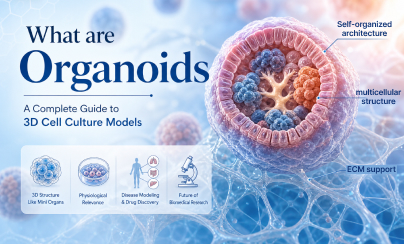
Many researchers ask, what is an organoid? The accepted organoid definition describes organoids as self-organizing three-dimensional structures derived from stem cells, progenitor cells, or primary tissues that mimic important structural and functional characteristics of native organs. These models possess intrinsic self-organization capabilities and can partially recapitulate features of their tissues of origin.
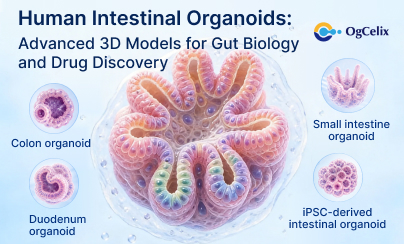
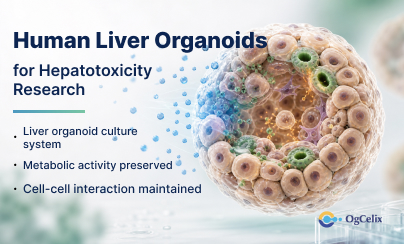
In simple terms, what are organoids? They are miniature in vitro tissue models capable of preserving cellular diversity and tissue-specific organization. Examples include intestinal, liver, brain, lung, and tumor organoids.
Traditional 2D cultures often reduce cell-cell interactions and fail to accurately reproduce physiological environments, which has accelerated the use of advanced 3D cell culture models.
Organoids vs Spheroids: What Is the Difference?
A common question is organoids vs spheroids. Although both belong to 3D cell culture models, important differences exist:
| Feature |
Organoids |
Spheroids |
| Cell source |
Stem cells or primary tissues |
Cell lines, primary cells, or mixed cells |
| Structure |
Complex and self-organized |
Simpler aggregates |
| Tissue architecture |
Mimics native tissue |
Limited organization |
| Functionality |
Higher physiological relevance |
Lower complexity |
| Applications |
Disease modeling, drug screening, personalized research |
Screening and simplified 3D models |
In discussions of organoids vs spheroids, organoids generally provide more biologically relevant tissue behavior, while spheroids are commonly applied in more simplified or high-throughput experimental systems.
Generation, Applications, and Future Perspectives
Researchers frequently ask how are patient-derived organoids made. Patient-derived organoids (PDOs) are typically generated from surgical tissues, biopsies, or tumor samples. After tissue collection, samples are commonly subjected to mechanical and enzymatic dissociation to isolate viable cells or tissue fragments. The resulting cells or fragments are embedded in extracellular matrices, such as Matrigel or basement membrane extract (BME), and cultured with optimized media, allowing them to self-organize into three-dimensional structures that can preserve key patient-specific characteristics when appropriately established and validated.
Current 3D organoid culture applications include cancer research, drug discovery, developmental biology, infectious disease studies, and regenerative medicine research. Understanding the advantages and disadvantages of organoids is important when selecting experimental platforms. Organoids provide advantages including higher physiological relevance, improved tissue architecture, and personalized modeling capability. However, challenges such as technical complexity, variability, and higher costs remain important considerations. Key limitations include technical variability, lack of vascular/immune/stromal components, matrix batch effects, and reproducibility challenges
Conclusion
Understanding what are organoids, the organoid definition, and the differences between organoids vs spheroids can help researchers select appropriate experimental platforms. As 3D organoid culture applications continue expanding, organoids are expected to play an increasingly important role in disease research, drug development, and precision medicine.