Human Liver Organoids for Hepatotoxicity Research
Why Liver Organoids Are Transforming Hepatotoxicity Studies
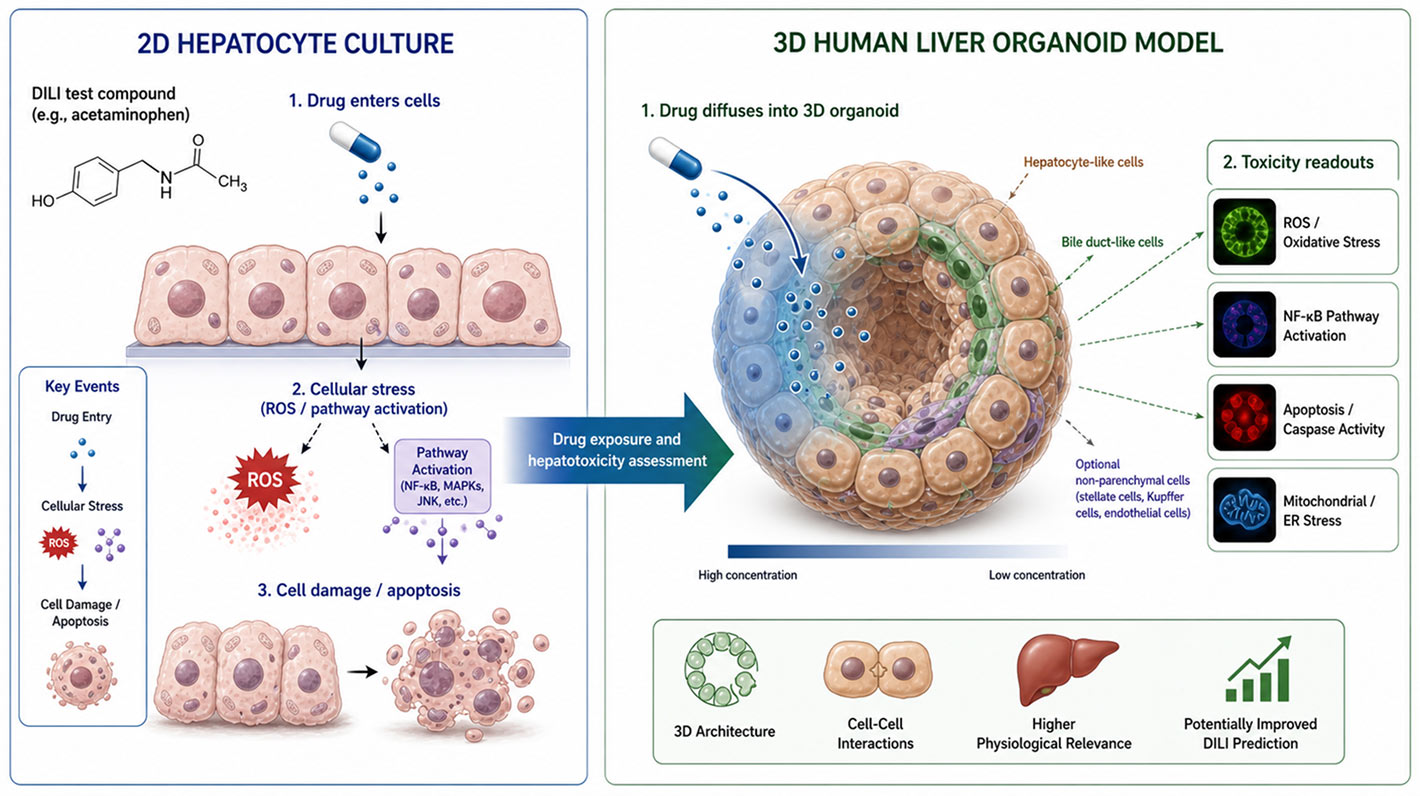
Liver toxicity remains a major challenge in drug development, contributing to clinical trial failures and post-market drug withdrawals. Traditional 2D cell culture systems often fail to accurately replicate human liver physiology, creating a need for experimental models with greater physiological relevance.. As a result, liver organoids have emerged as an advanced platform for studying liver biology, drug metabolism, hepatotoxicity, and may provide a more physiologically relevant and potentially more predictive platform for drug-induced liver injury (DILI) assessment when appropriately validated.
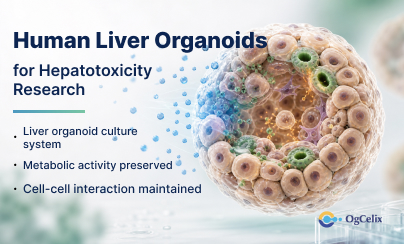
Derived from human liver tissue, Human Liver Organoids are self-organizing 3D structures that recapitulate selected structural and functional features of native liver tissue. Compared with conventional cell cultures, liver organoid culture preserves important cellular interactions and certain liver-specific functions, making it a highly relevant 3D liver model for biomedical research.
Applications in Drug-Induced Liver Injury Research
One of the most valuable applications of liver organoids is the study of drug-induced liver injury. As a leading cause of drug development failure, drug induced liver injury remains a critical concern for researchers and pharmaceutical developers.
Human liver organoids provide a physiologically relevant platform for investigating toxicity mechanisms, evaluating hepatotoxic compounds, and improving the prediction of clinical outcomes. These models can support studies associated with drug-induced liver injury (DILI) and help bridge the gap between preclinical experiments and preclinical in vivo DILI findings. They may also be used to evaluate liver responses to compounds linked to ibuprofen liver toxicity and other hepatotoxic agents.
Key Advantages of Liver Organoids
- Physiologically relevant liver 3D modelthat better reflects human liver function.
- Long-term liver organoid culture with maintained selected structural and functional characteristics in selected culture systems.
- Improved prediction of drug induced liver injurycompared with traditional in vitro models.
- Compatible with high-throughput organoid drug screening
- Valuable as an in vitro liver disease modelfor studying liver disorders and therapeutic responses.
Organoid Drug Screening and Disease Modeling
The adoption of organoid drug screening technologies continues to grow across the pharmaceutical industry. As a robust 3D liver model, liver organoids can be used for toxicity assessment, drug metabolism studies, and candidate compound evaluation, providing more predictive data than many conventional systems.
Beyond drug safety assessment, organoids liver models also serve as powerful tools for disease research. They can be applied to the study of liver fibrosis, non-alcoholic fatty liver disease (NAFLD), and other liver-related disorders, especially when combined with relevant non-parenchymal cells, supporting both mechanistic investigations and therapeutic development.
Future Perspectives
As the demand for human-relevant research models continues to increase,
Human Liver Organoids are becoming an increasingly important tool for hepatotoxicity assessment and translational research. By combining the advantages of a physiologically relevant 3D liver model with scalable organoid drug screening capabilities, liver organoids are helping researchers better understand liver biology, evaluate drug safety, and accelerate the development of safer and more effective therapies. Continued improvements in model standardization, tissue maturation, and cross-platform validation will further enhance their utility for biomedical research and drug development.