
What Are Organoids?
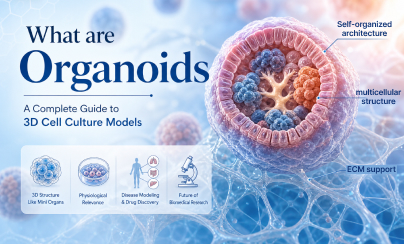
Organoids are three-dimensional (3D) miniature structures cultured in vitro that closely mimic the architectural and functional features of their corresponding organs in vivo [1]. More specifically, organoids are formed through processes of self-renewal and self-organization, yielding structures that exhibit spatial organization similar to native organs and perform specialized physiological functions. Organoids are characterized by three principal attributes. First, they demonstrate the ability of cells to self-organize via spatial arrangement and cellular differentiation, thereby replicating functional aspects of the original organ. Second, they consist of cell types representative of those found in the source organ [2]. Third, they are capable of performing certain organ-specific functions such as filtration, excretion, neural signaling, and contraction.Historical Development of Organoids
The conceptual foundation of organoid technology traces back to early investigations into cellular self-organization. A notable example H.V. Wilson’s 1907 observation that dissociated sponge cells could reaggregate into functional multicellular organisms [3]. Subsequent advancements in vertebrate biology, coupled with the isolation of murine pluripotent stem cells (PSCs) in 1981, represented a seminal advance in stem cell biology [4, 5]. Further key developments included the derivation of human embryonic stem cells (ESCs) in 1998 [6] and the generation of induced pluripotent stem cells (iPSCs) in 2006 [7]. The contemporary era of organoid research commenced in 2009 with the generation of the first intestinal organoid from Lgr5+ stem cells by Hans Clevers [8]. This breakthrough catalyzed rapid expansion in the field, leading to the establishment of organoid models of the brain, kidney, lung, and other organs. These 3D systems now serve as indispensable tools in biomedical research, providing physiologically relevant alternatives to conventional two-dimensional (2D) cell cultures and animal models.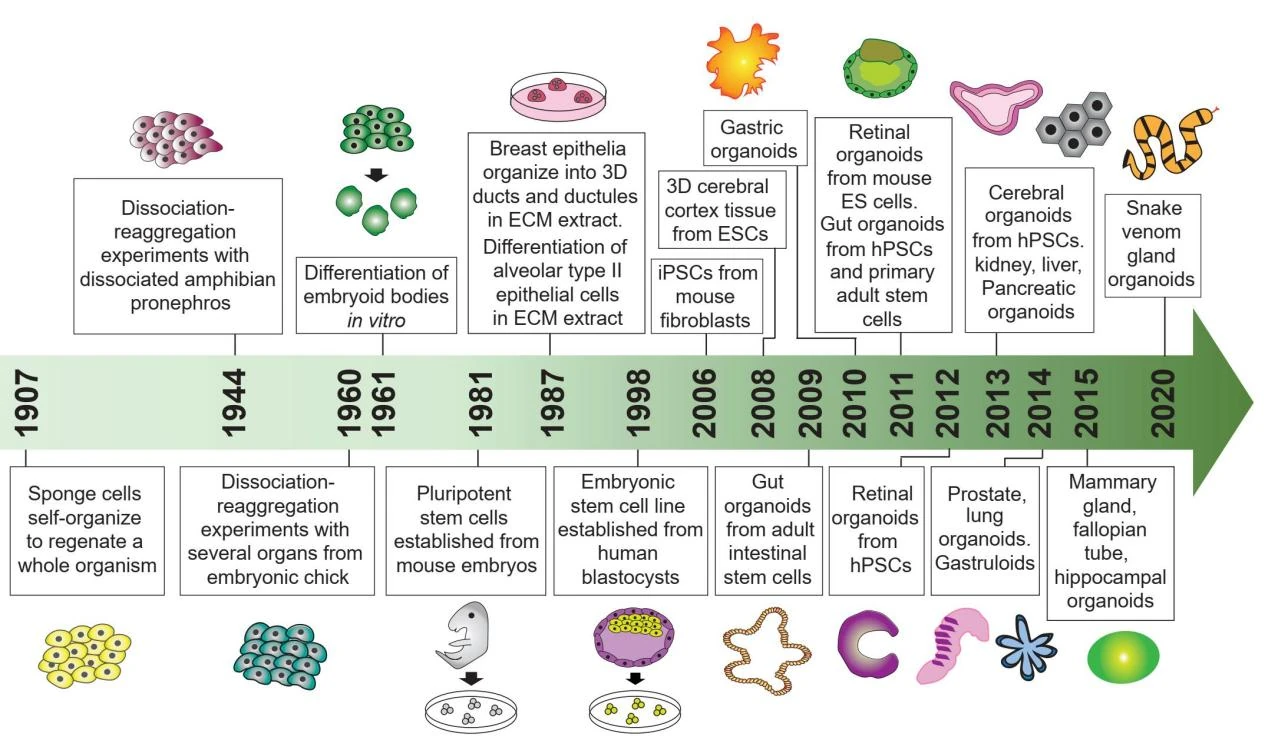
Figure 1. Timeline of key developments in organoid culture technologies, highlighting landmark studies and breakthroughs.
The Need for Alternative Model Systems in Biomedical Research
The ethical principles of the 3Rs—“Replacement, Reduction, and Refinement”—have guided animal research since their introduction in 1959. These principles mandate that animal experiments should only be conducted when no alternative methods are available. In recent years, regulatory agencies have increasingly acknowledged the utility of advanced in vitro models. For instance, in 2017, the U.S. Food and Drug Administration (FDA) incorporated data from organ-on-a-chip platforms into a new drug application for the first time. By August 2022, the FDA reviewed an investigational new drug application that included preclinical data derived from organ-on-a-chip technology, representing a pivotal advancement in alternatives to animal testing. More recently, the agency has moved to eliminate mandatory animal testing for monoclonal antibodies and certain other therapeutics. Consequently, the adoption of alternative model systems such as organoids has become increasingly imperative.Generation and Preparation of Organoids
Organoids can be derived from either pluripotent stem cells (PSCs)—including embryonic stem cells (ESCs) and induced pluripotent stem cells (iPSCs)—or organ-specific adult stem cells (ASCs). These cells are cultured under precisely controlled conditions that promote recapitulation of innate developmental programs and self-organization into functional 3D structures. The presence of active stem cell populations in organoid cultures enables substantial expansion and long-term maintenance. A typical organoid culture system requires several critical components: a suitable extracellular matrix (ECM), signaling factors essential for maintaining the stem cell niche, and differentiation-inducing agents. The ECM, often composed of proteins such as laminin, collagen, nidogen, and fibronectin, provides structural support and biochemical cues necessary for 3D organization. Niche maintenance factors primarily facilitate cell proliferation and suppress apoptosis. Moreover, patient-derived tumor organoids offer a clinically relevant platform for personalized medicine approaches.Categories and Applications of Organoids
Since the successful generation of intestinal organoids in 2009, organoid technology has been extended to a wide array of organs. The significance of this methodology was underscored when organoids were listed among the “Top 10 Technologies” by Science in 2013 and named “Method of the Year” in 2017 by Nature Methods. To date, organoids have been established for numerous organs, including the brain, inner ear, optic cup, lung, intestine, kidney, liver, pancreas, stomach, and others. These systems model both normal and pathological tissues, including cancer.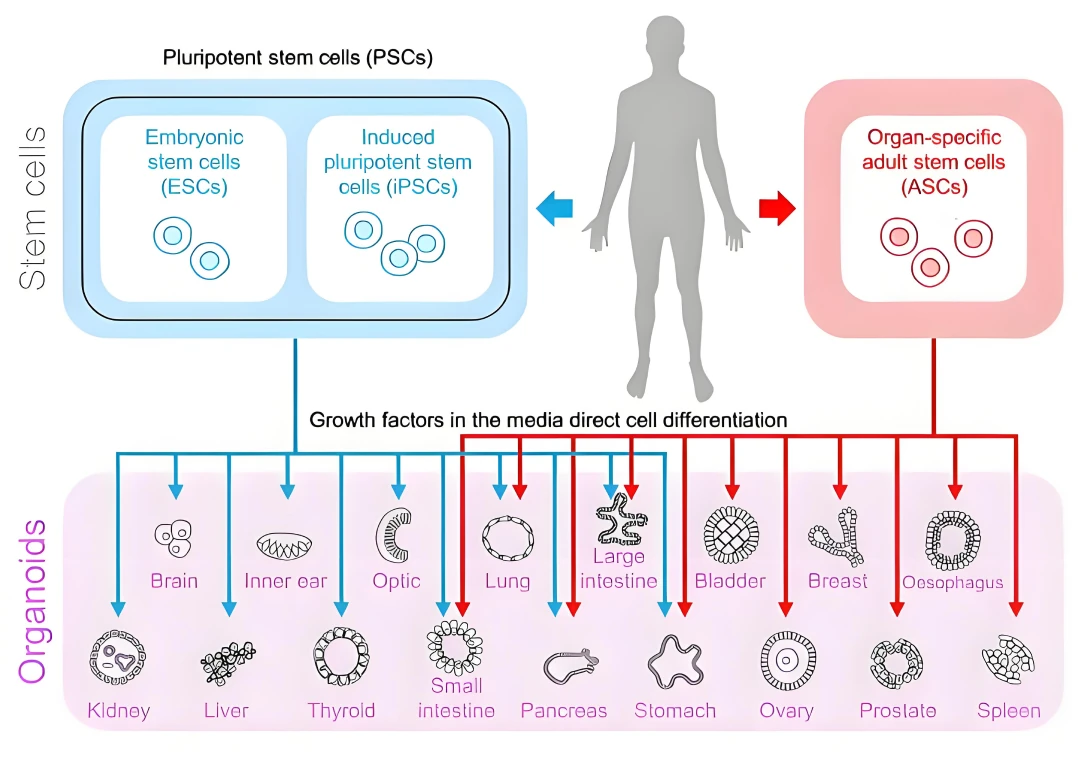
Figure 2. Schematic representation of organoid establishment from human or animal pluripotent stem cells (PSCs) and adult stem cells (ASCs).